Gratitude

It happened in the Auschwitz extermination camp in World War II.  There was an escape from the camp and as was the custom at that camp, for every escapee 10 other prisoners were selected at random and placed in a cell without food or water until they died.  On this day the tenth person chosen was a man named Franciszek Gajowniczek who began to sob because he had a wife and children in the camp.  From the assembled prisoners a Catholic priest named Maximilian Kolbe stepped forward and requested the camp commander allow him to take Gajowniczek’s place.  Kolbe’s request was granted.

Gajowniczek never forgot Kolbe’s sacrifice.  Every year he went to back to Auschwitz to say thanks to the man who died in his place. In his back yard there is a plaque he made himself to honor Kolbe. [1]

I have heard a lot of criticism of the Christian churches over my years.  Some of my  friends have given up on churches and no longer attend.  God knows there is much the church needs to change and improve upon but in spite of all their failures, I still think it is important for me that once or twice a week I meet with other Christians to thank the one who took upon himself my sin and gave me eternal life.  To remember again the one who:

“. . .was wounded for our transgressions; he was crushed for our iniquities; upon him was the chastisement that brought us peace, and with his stripes we are healed.”  (Isaiah 53:5 ESV)

______________________________________

[1]   Max Lucado.  Six Hours One Friday.  Nashville, TN:  Thomas Nelson, 2004, pp. 45-47.

Posted in Application | Leave a comment

Stones

I recently came across a observation from a Christian in India, Sandhu Singh.  Singh pulled a rock from a river and when he broke it open, he observed the inside of the stone was  perfectly dry.  Even though the rock had been in the river for a long time, the water had not penetrated the stone.  He noted the similarity between this rock and some Christians who have been surrounded by Christianity for their entire lives but it has not penetrated their lives.  It has not changed their soul.

This observation is what we have repeatedly emphasized in this blog—being a Christian is more than having certain beliefs.  God requires that our soul be changed so it is like him.

Posted in Uncategorized | Leave a comment

Thy Kingdom Come

David Livingston was a missionary to Africa in the 1800’s.  He was also considered to be a prominent explorer and is created with doing much through his writings to end the slave trade in Africa.  His moral standing among all the Africans was great and even the slave traders provided him assistance when they could. [1]

The slaver traders used brutal tactics to sow terror in the villagers.  An example of this was at Nyangwe on July 15, 1871 when the slavers killed 350 to 400 villagers.  Livingstone’s description of that day was that it was like being in hell and the only thing he could do was to pray “O, let Thy kingdom come.”  [2]  Events like this occur to frequently in our world.  In previous blogs we have noted several which have involved millions killed by governments and which have occurred within the past 100 years.  Anyone with any compassion asks why God does not end it all; why God does not establish his kingdom on this earth immediately.

However God must have other plans. It might be that:  “The Lord is not slow to fulfill his promise as some count slowness, but is patient toward you, not wishing that any should perish, but that all should reach repentance.” (2 Peter 3:9-10) ESV.  But still, because of events like these, our belief in an all-powerful, compassionate God is challenged.

_________________________________________

[1]   Alan Moorehead.  The White Nile.  New York:  Harper & Row, 1960, p. 99.

[2]   Ib id., p. 107-109.

Posted in God's Sovereignty | Leave a comment

Strong Enough

In the exploration of the source of the Nile river in the late 1800’s, one explorer quoted a minor chief in central Africa named Comora as saying:  “The good people are all weak:  they are good because they are not strong enough to be bad.” [1]  At first I thought this  was in reality a justification for the chief’s evil ways but then on further thought it appeared to me to contain an element of truth.

Bad people are stronger than good people and the reason is because they must be in order to survive.  An example of this is when the explorers broke camp at the start of the day.  Their last act was to torch the grass huts they had built the previous day.  My question was:  why go to this extra work?  “The huts, of course, might have been useful for other travelers, but one left no gifts for strangers in this hostile world.” [2]  In a world where everyone is potentially your enemy, it would make sense to destroy anything that would benefit your enemy—a scorched earth policy, even if it required extra effort to do so.

Another reason bad people are stronger than good people is because we are created in the image of God (Genesis 1:27 and Psalms 8:4-5).  If this is so, then it would require an effort to be unlike God.  Just think of all the money and effort that those who fail to follow God’s standards impose on the rest of the world (e.g. prevention of theft, personal protection).  What a waste!  Why do we work so hard to be unlike God?

On the other hand, there are good arguments to support the idea that bad people are weaker than good people.  Good people do not conform to this world (Romans 12:2) and it takes strength to be different from the norms of this world.  Just consider all the martyrs for the Christian faith.  Bad people simply conform to whatever the rest of the world does.  Is it because they are too weak to oppose the world in which they live?

______________________________________

[1]   Alan Moorehead.  The White Nile.  New York:  Harper & Row, 1960, p.147.

[2]   Ibid., p. 30.

Posted in Application | Leave a comment

Ego or Reality

I read the blog of Steve Tobak because he consistently brings a new perspective on subjects on which I have already thought.  His blog of a year ago dealt with a subject that has been discussed for centuries and we Christians just assume we have the answer.

Steve Tobak states:  “Besides, I’ve always thought it a bit presumptuous of us to assume that there must be a reason for  our existence.  Billions of stars in billions of galaxies formed who knows how or why and we’re so special there has to be a reason for us?  Give me a break.”

Now read Psalms 8:3-6.  It sounds like Tobak is paraphrasing the following psalm of David.

“When I look at your heavens, the work of your fingers, the moon and the stars, which you have set in place, what is man that you are mindful of him, and the son of man that you care for him?  Yet you have made him a little lower than the heavenly beings and crowned him with glory and honor.  You have given him dominion over the works of your hands; you have put all things under his feet,”  (Psalms 8:3-6 ESV)

My studies in astronomy has taught me how vast the universe is and how small we are.  Why should a being who can create such a universe bother with us?  Yet for centuries and across many different cultures, the belief in a God who created us in his image (Genesis 1:27) has persisted.   Why?  Is it our ego or is it reality?

___________________________________________________

Steve Tobak.  “The True Meaning of Life, the Universe and Everything”.  February 1, 2021.

Posted in Reasons | Leave a comment

Stubbornness and Ego

A couple of blogs ago, we discussed the strengths and weakness of science.  In reading a book about the history of the city of Carthage, the authors list several skills a good archaeologists should have and I would apply the necessity of these skills to any scientist.

Archaeologists should realize that the most difficult part of their research is reaching conclusions at the end of their archaeological dig and they should have a good feel and experience in the use of probability and reason.  “Another  quality of great use to the archaeologist, but rarely encountered, is the ability to admit when an error in interpretation has been made.  Stubbornness and ego have impeded scientific study for generations.” [1]

Stubbornness and ego have impeded progress in all of our human endeavors including our understanding of God and the Bible.

_________________________________________

[1]   David Soren,  Aicha Ben Abed Ben Khader, and Hedi Slim.  Carthage.  New York:  Simon  and Schuster, 1990, p. 85.

Posted in Reasons | Leave a comment

Reason

Andrée Seu Peterson is about to give up on the use of reason to persuade people of the validity of the tenants of Christianity.  The reason is because she observes how people have a tendency these days to twist reason and language in their attempt to justify the positions they hold.  This is not anything new for the human race.  As Andrée observes:  “. . .unaided reason as the unerring path to truth is an idea that has crashed and burned again and again on the ash heap of history”. [1]

Peterson’s point is valid but God does not expect us to avoid the use of reason.  In fact, God commands us to use reason.

“. . .always being prepared to make a defense to anyone who asks you for a reason for the hope that is in you;”   (1 Peter 3:15-16 ESV)

“But the wisdom from above is first pure, then peaceable, gentle, open to reason, full of mercy and good fruits, impartial and sincere.”  (James 3:17-18 ESV)

“Come now, let us reason together, says the Lord:” (Isaiah 1:18 ESV)

Proverbs is filled with admonishments to seek knowledge, wisdom, and insight.

This also demonstrates that Christianity is not the opium of the masses; in fact it is a very difficult path to take.  Not only must we present our faith, we must also defend the validity of the use of reason and then use reason to defend our faith.

_________________________________________

[1]   Andrée Seu Peterson.  “Back to the Word”.  World, November 6, 2021, p. 70.

Posted in Reasons | Leave a comment

Science

Lately we have heard a great deal about following “the science” but different persons seem to have different ideas of what constitutes “the science”.  So what is “the science”?

I recently was at a church at which the pastor declared that he did not like science.  This pastor enjoys much technology that science has brought him so why would he not like science?

The problem is that many do not understand what science is.  Many think science is a set of facts about the natural world.  However, the first class on science that I took in college emphasized that science is not a set of facts but is a process–a process of discovering how our physical world functions.  This process consists of developing a hypothesis, testing that hypothesis, revising the hypothesis based upon test results, and then repeating the process.  This is a never ending process.

if scientists believe science is an accumulation of facts, they close their mind to information that might challenge those facts.  The history of science teaches us the wisdom of this tenant of science because scientists once believed in all manner of ideas that we consider erroneous today and undoubtedly future generations will look at some of our current scientific “facts” as humorous.  Scientists once believed that space was filled with an ether.  Now we believe space to be a vacuum.  Scientists once believed that catastrophes had no part in shaping our earth (uniformitarianism).  Now scientists believe that meteorite impacts have caused the extinction of various species of animals at various points in time.  In the 1700s, scientist scoffed at the rural folks who told them that rocks fell from the sky and denied what we now know as meteorites existed.  Now scientists go to great lengths to find meteorites and study them.  If you read any science periodical, you will constantly find research that challenges what we know and understand.  As a recent article articles on brown dwarfs and exoplanets states: “Nature does not abide by the rules laid out by the International Astronomical Union” [1] or any other scientific organization.

While science provides us with the technology that has made vast improvements to our lives, we must recognize that science is a human endeavor and like all human endeavors, it is fallible and incomplete.  What many people call science is just our current understanding of what is known about our world.  This understanding might be valid or it might not.  Science, for the foreseeable future, will be constantly revising its beliefs as it discovers new evidence.  This is the way science works.

___________________________________________

[1]   Caroline Morley, “The In-Betweeners”, Sky & Telescope, March 2022, p. 39.

Posted in Application | Leave a comment

Those Not Evangelized

I’ve read two books on St. Paul recently, one that was copyrighted in 2012 and the other in 1896.  I learned quite a bit about Paul from both.

One of the books mentioned that Christianity’s influence in Asia Minor was primarily to the Greek speaking people in the cities.  The people in the rural areas who spoke the Phrygian language were not evangelized by Christians. [1]  In Paul’s travels around  Asia  Minor, he visited certain places and not others.  As Acts 16:6-7 tells us Paul was forbidden by the Holy Spirit to preach in Asia and Bithynia.  Will God send all the people who were by passed by Paul on his journeys to hell?  Because Paul did not go to them, they had no opportunity to hear and believe.

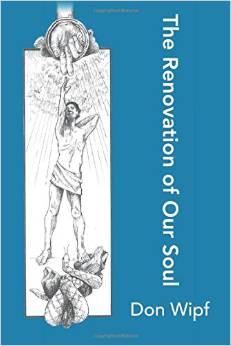
As we have asked in my book, The Renovation of Our Soul, this applies to a multitude of people around the world.  For centuries, people in North America, South America, Australia, and the islands of the South Pacific had no opportunity to be saved.  Is this a God of mercy, love, and justice?  There must be something we do not understand about God’s plan of salvation.

_________________________________________

[1]   W. M. Ramsay.  St. Paul the Traveller.  New York:  G. P. Putnam’s Sons, 1896, p. 132.

Posted in Salvation | Leave a comment

Personal Tragedy

A woman was lamenting the death of her son in a car accident.  She asks why God did this to her.  A hospital chaplain replies that God did not have anything to do with her son’s death and the woman snapped back, “Don’t you take away the only hope that I have”. [1]  Like many who suffer devastating tragedy, she was hoping God had some significant reason for imposing so great a loss upon her.

If we stand back and objectively look at the personal tragedies we experience in our lives, we must face the fact that most are meaningless.  The author of the book of Ecclesiastes (who is identified as the Preacher, who is thought to be Solomon, and who many consider the wisest man who ever lived) provides us with a whole book full of examples.  In fact he states that all of life is vanity (Ecclesiastes 1:2), or as other translations put it, all of life is a vapor, is meaningless, or is pointless.

Now most commentaries conclude Ecclesiastes teaches that life not centered on God is meaningless.  They have a hard time accepting the fact that our existence is pointless.  However, look at what the Preacher says.  Whether one is centered on God or not does not change the fact that there is nothing new under the sun (1:9-10), that no one is remembered after their death (1:11), that work is meaningless because we must leave the results to someone and we do not know if they will put it to good use (2:17), that God has set eternity in our hearts yet we cannot understand what God has done in eternity (3:11), that we cannot not really know what happens to our spirit after death (3:21), that oppression exists for all regardless of their beliefs (4:1-3), that wisdom is difficult to obtain (7:23-24), that “. . .The race is not to the swift or the battle to the strong, nor does food come to the wise or wealth to the brilliant or favor to the learned. . .” (9:11), that wisdom is better than strength but wisdom is not always rewarded (9:13-16), that we cannot understand the works of God (11:5}.

The Preacher states what we know to be true, if we are honest about what we have experienced and know about our life.  He gives us an accurate portrayal of the human condition.   Do we really think that 500 years from now any of us will be remembered?  Do we really think that 500 years from now the events of our lives will have a meaningful impact on that generation?  To answer that question, do you know who your ancestors were 500 years ago?  What do you know of their lives?

So what is the conclusion of the wisest man who ever lived given that our lives are meaningless?  The Preacher simply states:

The end of the matter; all has been heard.   Fear God and keep his commandments, for this is the whole duty of man.   For God will bring every deed into judgment, with every secret thing, whether good or evil.  (Ecclesiastes 12:13-14 ESV)

What makes our lives meaningful is the type of person we become.  What makes our lives meaningful is if we utilize our life experiences, whatever they are, to become more like God.  The events of our lives are fleeting moments in eternity but what will live forever is our soul.  And we determine what our soul will be like by the decisions we make, by our deeds, by whether we keep God’s commandments during the seemingly meaningless events of our lives.

So how should we respond to people who are experiencing deep and painful suffering such as the woman who lost her son?  In such a situation our first response is to provide comfort and trying to correct someone’s theology at such a time is not appropriate.  Even though God is not responsible for all that occurs on our earth (we do have free will), in times like these we need the faith that Paul expresses in Romans 8:28:  “And we know that for those who love God all things work together for good, for those who are called according to his purpose.”  Even the seemingly meaningless and sorrowful events of our lives will work together for our good if we allow God to do so.

________________________________________

[1] Marvin Olasky, “What Price Hope”, World Magazine, December 8, 2018, p. 42.

Posted in Application | Leave a comment