On Being Honest

As mentioned in the last blog, we are evaluating several sermons given by Thomas Chalmers who lived 200 years ago.

Chalmers states that certain virtues mentioned by Paul in Philippians 4:8 (things that are true, honorable, just, pure, lovely, and commendable) Paul does not define.  Rather he assumes his readers know what they already are and this includes the non-Christians who not only knew them but practiced them.  [1]  Chalmers asks how does that square with the Bible’s view of the depravity of humans? [2]

What Chalmers asserts is that much good is done with the expectation of a return. [3] Does a businessman who is honest exhibits that trait because his soul is honest or because he has found out through experience that the only way he can become wealthy is to be honest.  Is he honest because that is what he is at his core or because he must be so in order to get what he wants?  Would he be honest if he faced the loss of his business?

If a person is honest solely to enable him to become wealthy, then as Jesus says, that is its own reward.  “Thus, when you give to the needy, sound no trumpet before you, as the hypocrites do in the synagogues and in the streets, that they may be praised by others. Truly, I say to you, they have received their reward.”  (Matthew 6:2 ESV) [4] A businessman cannot expect that God will look favorably on him in the last judgment just because he was honest if the reason was solely for selfish reasons.

God wants a relationship with us that involves our entire being, our entire soul, not just part of our soul.

____________________________________________

[1]   Thomas Chalmers.  The Application of Christianity to the Commercial and Ordinary Affairs of Life.  Hartford:  Oliver D. Cooke, 1821.  Reprinted by Sagwan Press, p.7

[2]   Chalmers, p. 11.

[3]   Chalmers, pp. 53-54.

[4]   Chalmers, p. 26.

Posted in Application | Leave a comment

A Voice from the Past

I recently purchased a book based solely on the title.  The title is:  The Application of Christianity to the Commercial and Ordinary Affairs of Life and it is a series of sermons given by Thomas Chalmers back in the early 1800;s. [1]  The reason for the purchase is because the current state of Christianity, both in churches and at publishers, is more focused on “feel good” theology than it is on the more difficult topics of what the Bible says about how we are to live our lives.  I wanted to see if someone from another time period would actually address the issues of ordinary and business life.

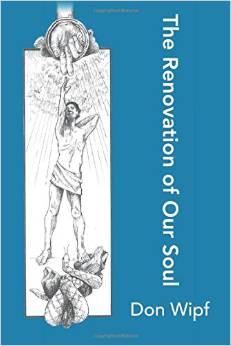
The reason why I wrote my book, The Renovation of Our Soul is because I saw that Christianity is ignoring the Biblical teaching on the new life we are to live and on the change of our soul so it is like God.  Chalmers’ book shows this was a problem in his day as well.

So, for the next few Sundays, track what the sermons at the church you attend are about.  Can you take what is said and apply it to your job?  Does what is said help you improve your relationships with friends and family?  Does it challenge you to make changes in your life?   And in the next few blogs we will see what Chalmers has to say.

________________________________________________

[1]   Thomas Chalmers.  The Application of Christianity to the Commercial and Ordinary Affairs of Life.  Hartford:  Oliver D. Cooke, 1821.  Reprinted by Sagwan Press.

Posted in Application | Leave a comment

Moral Courage

In my readings, I recently came across a reference to Plato’s four virtues which are:  moderation, justice, wisdom, and courage.  I want to discuss courage which is defined as “the quality of mind or spirit that enables a person to face difficulty, danger, or pain without fear.”  Fear is defined as “a distressing emotion aroused by impending danger, evil, pain.”

One blogger comments that:  “While it is easier to find examples of physical courage, moral courage is difficult to find in contemporary society.” [1]  Why is this so?

“Moral” is defined as:  “Pertaining to or concerned with the principles or rules of right conduct or the distinction between right and wrong.”  So moral courage is the willingness to face difficulty when we make decisions on what is right and wrong.  It seems that we are afraid of making difficult moral choices.  Why?  What is it about these moral choices that produces such a lack of courage within us?  I can see a couple of reasons.

First, we are social creatures and we tend to go along with the norms of the society in which we live.  If we do not, then society is able to employ very effective means to ensure our compliance—we are ostracized.  The fear of being excluded from our group is very effective so we allow our culture to make our moral choices for us.

Second, our own selfish interests drive our moral choices.  Money, position, or fame are more important to us and if right conduct gets in the way of obtaining these, then goodbye right conduct.  However, the Bible tells us:  “For the love of money is a root of all kinds of evils. It is through this craving that some have wandered away from the faith and pierced themselves with many pangs.”  (1Timothy. 6:10 ESV).  It appears we are willing to sell our soul to gain what we want on this earth (Mark 8:36).  Is that really what we want?

These days moral courage is in short supply.  Will the moral choices each of us make add to or subtract from that supply?

____________________________________________

[1]   https://blog.uvm.edu/pstanden/2012/03/13/the-4-virtues/

Posted in Application | Leave a comment

Reasons for Unbelief

The Christian organization called the European Leadership Form is debating the reasons why Europe “has the world’s highest percentage of atheists and agnostics”. [1]  From what I read, they do not have an answer.  However, another article I read has what I believe is the best explanation.  It was articulated by Bart Barber, the new president of the Southern Baptist Conference.

I think we’ve done a great job at heeding Biblical commands regarding what we should believe and teach.  But we’ve done less admirably in obeying God’s commands about how we should treat one another. [2]

As I say in my book, The Renovation of Our Soul:  “If the world is not interested in what Christianity has to offer, it is because our soul is not like God.  Mahatma Gandhi was an admirer of Christ and applied many of the principles taught by Christ but he refused to become a Christian because so many Christians were so unlike Christ”.  [3]

It is very necessary that Christians have a Biblical based theology, a valid belief system.  However, the Bible also teaches we must also follow Jesus’ teachings.  And how are we to treat our fellow Christians?

By this all people will know that you are my disciples, if you have love for one another.” (John 13:35 ESV)

Do we Christians exhibit love for one another as is spelled out in I Corinthians 13?  There are plenty of examples that indicate we do not.  If not, can we honestly wonder why people do not seek Christ?

“And by this we know that we have come to know him, if we keep his commandments.  Whoever says “I know him but does not keep his commandments is a liar, and the truth is not in him,”  (1John 2:3-4 ESV)

____________________________________________________

[1]   Jenny Lind Schmitt.  “Treating Disease at Its Source”.  World, July 16, 2022, p. 79.

[2]   Mary Jackson.  “A New Leader for the SBC”.  World, July 16, 2022, p. 14.

[3]   Dibin Samuel, “Mahatma Gandhi and Christianity”, Christianity Today, http://inchristiantoday.com/articledir/print.html?id=2837.

Posted in Application | Leave a comment

Illiteracy in the Church

Surveys taken over the past several years reveal that over two thirds of Christians/church goers never read their Bibles. [1]  Now there are people who do not know how to read and throughout history many depended upon the clerics of their church to read and interpret the Bible for them.  However, that is not the case today for the vast majority of people.

We do not seem to realize all the great benefits our technologically advanced society has given us and one of which is the ability to read.  A T-shirt I have quotes Mark Twain as saying (and I paraphrase):  A person who does not read good books has no advantage over a person who does not know how to read.  And the Bible is a good book.  So why do not we read it?

In Luke 12 Jesus gives his disciples a parable in which a servant is instructed to be ready for his master’s return and part of being ready is to fully utilize the talents and abilities he has been given.  The point of the parable is that:  “. . .Everyone to whom much was given, of him much will be required, and from him to whom they entrusted much, they will demand the more” (Luke 12:48).  We have been given so much materially and spiritually.  Are we using these gifts rightly?

___________________________

[1]   Ken Staley.  “Illiteracy in the Church”, Tulsa Beacon, October 20, 2022, p. 3B.

Posted in Application | Leave a comment

Free Will

Christianity has debated human free will forever.  Some argue that if God is sovereign, omnipotent, and omniscience, how can we humans have free will?  The Bible constantly details how God is involved in our world so if God decides on a certain course of action, how can we humans resist?

However, there is evidence that free will does exist.  One argument I read recently states that if we are made in the image of God, then we must have free will because God has free will. [1]  Also the first chapter of Genesis tells us that God made humans the ruler of all creation.  Humans must have free will if they have control or dominion over the rest of creation.  If Adam and Eve had the free will to eat of the tree of knowledge of good and evil or not, then God must have created us with free will.

What fuels the continuation of this debate is because there are arguments on both sides.  I believe the Stoic philosophy makes the most sense.  Their conclusion is that reason tells us plainly we have free will in certain instances and not in others.  We do not totally control our life in regards to our health, wealth, friends, and time of death because the genetics we inherit, and the culture and family into which were born greatly influence these aspects of our lives.  What we do control is our will, our judgment, and our moral choices.[2]

____________________________________________

[1]  Michael S. Heiser.  The Unseen Realm.  Bellingham, WA:  Lexham Press, 2015, p. 267.

[2]   Marcus Aurelius, Meditations, New York:  Penguin Books, 1964, p. 17.

Posted in Choices | Leave a comment

Pilgrim’s Progress

I read Pilgrim’s Progress a very long ago and really don’t remember the details of the story.  What prompted me to read it again was reading the version from “the minds behind ‘The Babylon Bee’” titled The Postmodern Pilgrim’s Progress.  I highly recommend both.

I guess you could say these books are dark; they mainly talk about the problems Christian faces.  When faced with problems such as times when it seems that God is so far away or when we realize that we do not have answers to the problems we are facing, then the advice given several times in Mann and Berry’s book is very appropriate:  “Sometimes, all you can do is move forward.” [1]

If we have decided our goal  is the Celestial City, the Golden City, if we have put on the whole armor of God, if we have decided the type of person we want to be, then there is nothing else to do but to  move forward toward our goal, regardless of the circumstances.  It is in these dark times that we live by faith (Habakkuk 2:4, Hebrews 10:38).

___________________________

[1]   Kyle Mann and Joel Berry.  The Postmodern Pilgrim’s Progress.  Washington, DC:  Salem Books, 2022, p. 63.

Posted in Application | Leave a comment

Force Rules the World

I have just finished reading Edmund Morris’s two volume biography of Theordore Roosevelt.  Roosevelt’s favorite poem was Henry Longfellow’s The Saga of King Olaf of which Morris placed an epigraph at the beginning of each chapter.  One epigraph was:

Force rules the world still, Has ruled it, shall rule it; Meekness is weakness, Strength is triumphant!

Further on the poem continues this theme:  “As King Olaf, onward sweeping, Preached the Gospel with his sword.”

Without a doubt, force does rule our world today.  Billions are spend on weapons of war each year.  Even those countries who have no designs on the territory of others are obligated to spend billions on weapons to defend themselves.  We are so far from implementing the Beatitudes from Jesus’s Sermon on the Mount one of which is:  “Blessed are the meek, for they shall inherit the earth.”  (Matthew 5:5 ESV).

Later in the poem, the voice of John the apostle speaks.

“Stronger than steel, Is the sword of the Spirit; Swifter than arrows,  The light of the truth is, Greater than anger, Is love, and subdueth!

If Jesus and John’s words are true, why does force still rule the world?  Is it that we have decided to utilize inferior weapons?  Force does enable us to achieve desired results quicker but if people are persuaded against their will, the results will not last.

Posted in Choices | Leave a comment

Sufficiently Revolutionary

If you have read my book The Renovation of Our Soul (and from looking at the sales numbers it is obvious most of you have not), you will know that I have been profoundly influenced by the Christian philosopher Elton Trueblood.  In his book A Place to Stand he gives a reason for believing in Jesus that I have not heard before.  Christ is the only historical figure who was sufficiently revolutionary to justify us following his teachings and to change our soul so it is like his.

“Because we are dulled by familiarity we forget, sometimes, that Christ provides the most revolutionary of conceptions, in that He sees each individual as an unconditional object of divine concern.” [1]

Can you imagine what our world would be like if we followed this teaching of Christ?  How many problems would it solve if we treated each person we meet as an unique creation of God.  What if we not only believed but also put into practice that well known phase:  “That all men are created equal, that they are endowed by their Creator with certain unalienable rights”.

________________________________

[1]   Elton Trueblood.  A Place to Stand.  New York:  Harper & Row, 1969, p. 44.

Posted in Application | Leave a comment

Our Will

At a recent church service we were singing the hymn “Take My Life and Let It Be” by Frances Ridley Havergal.  One phase of this hymn states:  “Take my will and make it thine, It shall be no longer mine”.  This phrase struck me because I could look at it in two different ways.

The first is what Jesus experienced in the Garden of Gethsemane:  “Father, if you are willing, remove this cup from me.  Nevertheless, not my will, but yours, be done.” (Luke 22:42-43 ESV)  There are times when our will conflicts with God’s will and we must submit to God’s will.

The second is what we have consistently stated in this blog and that is our ultimate goal is that our soul is to become like God which means our will should be like God’s will.  We should desire the same things as God does.  So if we are constantly telling  God “not my will but yours be done”, then something is wrong in our relationship with God.  Our will should not be in constant conflict with God’s will, instead it should be in the process of becoming the same as God’s will.

Posted in Application | Leave a comment