Next

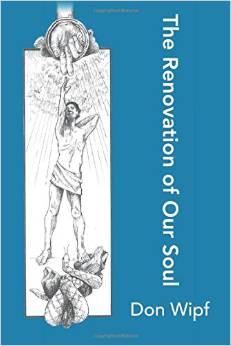
This blog is just over one year old.  During that time we have discussed questions about the Christian doctrine of salvation and God’s sovereignty.  In addressing those questions, we have not followed the doctrines of any one church.  Rather we have attempted to find answers which are both grounded in the Bible and in logic.  In addition, we have made use of the human condition to help answer our questions.  As we have stated before, learning how and why God constructed us the way he did can teach us much about God and how he relates to us.

One of the better descriptions of the human condition is given by a nobleman in King Edwin’s court (7th century) when Edwin was debating whether to convert to Christianity or not.  The nobleman stated that the life of man is like the flight of a bird in the king’s hall in winter, from darkness to darkness. [1]  We are so finite, we so limited in what we can know but very few individuals recognize that fact.  Most of us rather arrogantly assume our belief system is the correct one.  We should be more like the nobleman in Edwin’s court who encouraged a thoughtful consideration of this new idea called Christianity because it might reveal something of our origins and ultimate goals. [2]

In future blogs we will continue to address issues concerning the Christian doctrine of salvation, God’s sovereignty, and how God relates to us but we will also explore other topics such as proofs for the Christian faith.  As always, we will do so by asking questions and following wherever those questions lead us  Like any explorer, we do not know precisely where these paths might lead but is not that the nature of our existence, of life?

__________________________

[1]   Richard Fletcher, The Barbarian Conversion, New York:  Henry Holt and Company, Inc., 1997, p. 5.

[2]   Ibid.

Posted in Choices | Leave a comment

Choices

The movie The Mission is an illustration of how we justify our choice of what benefits us here on this world rather than focusing on the renovation of our soul.  This movie is about a representative from the Roman Catholic Church who comes to South America to resolve a situation involving the Spanish, Portuguese, and the Jesuits.  The Jesuits are ministering, with good success, to the Indians.  The Portuguese wished to enlarge their territory, the Spanish wished to not be harmed by this enlargement, the Pope was concerned that Spain and Portugal not threaten the power of the church, and all were concerned that the Jesuits not prevent all of this from occurring.  The states in Europe were tearing at the authority of the church and to preserve its power, the church must show its authority over the Jesuits.  If the church did not control the Jesuits and give Spain and Portugal what they wanted, they threatened to expel the Jesuits from their territories and other European states might follow.  The problem with giving Spain and Portugal what they wanted was that the rights of the Indians would be trampled.  Portugal was involved in capturing the Indians for slaves and Spain, while professing to be against slavery, was actively involved.  The European settlers in South America believed the Indians were animals, must be subdued by the sword, and must be brought to profitable labor by the whip.  Meanwhile, the Jesuits had assisted the Indians in developing a thriving commercial enterprise in farming and woodworking that competed against the European settlers.  The representative from Rome attempted to convince the Jesuits and Indians that the Indians must give up their commercial enterprises, return to the jungle, and give Portugal the land it wanted.  The Indians and Jesuits refused so the representative from Rome gave permission to the armies of Portugal and Spain to force the removal of the Indians from their settlements.  The result was a great loss of life among the Indians.

In attempting to justify the slaughter of the Indians to the representative of Rome, the European leaders in South America remarked that none of them had any alternative.  Because of the political situation in Europe, they did what they had to do.  They stated:  “We must work in the world; the world is thus.”  To this attempt to justify the recently completed horrific actions, the representative from Rome replies with a truth he learned much too late, “No, thus we have made the world.” [1]

All of us are like the European settlers in South America and the representative from Rome.  We are more concerned about preserving our earthly political, economic, and social power instead of creating a world where God’s values guide our actions.  In other words, we value our political, economic, and social power more than we do God’s values.  Our excuse is that we live in the world and to survive we must, at times, do what is we know to be wrong.  This is Machivelli’s philosophy; it certainly is not Christian.  This is why some believe the Christian moral code to be impractical; if we try to always do good, the world will have us for lunch.  In many instances the world will take advantage of us but that is why Jesus asks, what good is it for a man to gain the whole world, yet forfeit his soul? (Mark 8:36).

We make choices every day.  We have the choice of taking actions that will make our world more like the one Christ envisioned or taking actions that will perpetuate the evil that permeates our world.  We have the choice of taking actions that will make the world a better place to live or taking actions that continue the inequality and injustice we observe every day.  The choice is ours.  We cannot blame God; we cannot blame our DNA; we cannot blame our fate.  It is up to us to choose what our value system will be, what type of person we want to be, what our soul will be like.  We create our soul, and thereby our world and our future, through the values we hold and the choices we make.

_________________________

[1]   Roland Joffé, Director. The Mission.  With Robert DeNiro and Jeremy Irons.  Warner Bros., 1986.

Posted in Choices | Leave a comment

Constructing Our World

As we have seen in previous blogs, God has given us free will.  He has given us the ability to construct our world any way we desire.  We construct our world through the choices we make and the actions we take.

So why do we call ourselves Christians and say we want a world governed by the teachings of Jesus and at the same time choose that which benefits ourselves but harms others?  Why do we call ourselves Christians but fail to follow the example of Jesus?  The answer is that it is easier to conform to the existing world than it is to strive to change our world by changing ourselves.  Those who say religion is “the opium of the masses” obviously do not understand this point because God always calls upon people to do what is more difficult than they would prefer to do. [1]  It is easier to blame our DNA or our culture or the devil or God and remain the person we currently are than to embark upon the changes we know we should make.  Even in our religion we try to take the easy way out by making salvation solely dependent upon our belief system or a few actions instead of the renovation of our soul to be like God.

If evil triumphs in our world, it is because we decide that is the way we want our world constructed.  Many of us say we want good to prevail but we take actions that make our world a more evil place because we are more concerned about our material well being than about the well being of our soul.  In the movie Traffic a drug baron is imprisoned and his wife quickly takes over the drug trade because she does not want to give up her upscale life style.  She simply wants her life back and the impact to others does not matter. [2]  How many of us are like the drug baron’s wife?  True, we might not deal in drugs but we will violate other ethical principles to maintain our lifestyle.

Sometimes we violate our moral code for what we perceive to be a noble cause.  We are like the businesswoman, in the movie Head Office, who observes that we rationalize doing what we know is wrong so we can get the power that will give us the freedom to do all the good we really want to do.  The problem is that when we get the power, we cannot remember what it was we wanted the freedom for in the first place. [3]  We have so corrupted our soul in our efforts to get power that our soul no longer recognizes what is right.

We also try to rationalize doing what we know to be wrong by thinking that if we just violate our moral code just a few times, it will not matter. But it does matter because once we start down this road, where will we stop?  And if most of the people on earth do the same then together we have created a world that is governed by a moral code we acknowledge to be wrong.

_________________________

[1]   David Elton Trueblood, General Philosophy (New York:  Harper & Row, 1963), p. 219.

[2]   Steven Soderbergh, Director.  Traffic.  With Michael Douglas, Don Cheadle, Benicio Del Toro, Dennis Quaid, Catherine Zeta-Jones.  Universal Studios, 2002.

[3]   Ken Finkleman, Director.  Head Office.  With Judge Reinhold, Lori-Nan Engler, Eddie Albert, Richard Masur, Rick Moranus, Don Novello, Jane Seymour, Wallace Shawn, and Danny Devito.  HBO Pictures, 1985.

Posted in Choices | Leave a comment

The Mirror of Our Soul

Since our values create our world, the values we select are the most critical decisions we make in our lives.  However, we have not been very successful at determining what our values should be and our efforts in creating our world have consistently stumbled.  Human history is a record of the constant rise and fall of civilizations, and of constant wars between nations.  The atrocities committed on a daily basis on our planet are staggering.  The major problem the human race faces is not in discovering new scientific facts or in developing new technology to improve our lives as is evidenced by the problems that have been solved by science; the problem is in getting along with each other as is evidenced from watching the news.  We are very adept at using science and technology for our wars and terrorists acts.  We have become very efficient in utilizing our technology to destroy human life.  We have developed our agricultural science to such an extent that the issue is no longer having sufficient food to feed the world but whether we have the will to end starvation on our planet. [1]

Evidently, the values we use to create our world are lacking.  It should be obvious we need some assistance in deciding what to believe, in deciding upon the value system we should use to construct our world.  We humans have devised a variety of institutions, such as government, education, business, science, and religion to name a few, to organize ourselves in order to improve our existence.  To which of these institutions should we turn for guidance on what values we should hold?  Each one of these institutions has a dubious record.  Given that each of these institutions is a human construct and given that we humans are finite, that should not be surprising.

So why does God give us the freedom to make decisions on how we will live our lives but does not provide us with all the information we need to make the correct choices?  Why does God give finite beings infinite choices?  First, being limited forces us to work with others to overcome our limitations and improve our lives.  It is only by working with others that we can eliminate famine and epidemics.  Only by working together can we enjoy the benefits of living in a technologically advanced society.  It is only by working together that we can find out the reality of our existence.  This is a rather ingenuous way to persuade us to overcome our self-centered nature.

Second, being limited forces us to call upon resources deep inside us that we never knew we had:  our soul.  The values held by our soul are used to make decisions in life and those values create our world.  If we want to know what our soul is like, we only have to look at the world around us to see what we have created.  Our world reflects back to us, in a physical form, the reality of our non-physical soul.  This applies to our world, our nations, our communities, and our families.  The values held by each of these entities are reflected in its character and actions.  And if we do not like what we see, should this not give us the motivation and opportunity to change our soul?

___________________________

[1]   Dan Morgan, Merchants of Grain (New York, NY:  Penguin Books, 1980), pp. 444-445.

Posted in Choices | 2 Comments

Source of Values

A few years ago, my wife and I received the most terrifying Christmas gifts we had ever received—gift certificates to go sky diving.  One lesson I learned from that experience is that it taught me much about how we make decisions in life.  The week before we went sky diving was very stressful because of the conflicting emotions and thoughts I had about sky diving.  Previous experiences were of no help in resolving these conflicts since I had not jumped from an airplane before.  Logically, sky diving is safer than scuba diving or hot air ballooning so why was I so nervous?  But also logically, it did not seem to make sense to jump out of a perfectly functioning airplane.  Emotionally, I have had a desire to sky dive for some time and the thrill of experiencing something new such as falling through the air was appealing but also there is the potential of something going wrong and the results are very disastrous.  I could imagine all sorts of terrible events that could occur.  My logic and emotions were totally useless in helping me make a decision to sky dive or not.  My logic and emotions could be used to support either a decision to go sky diving or not to go.  So how did I make the decision to go?  Values.  I value exploring, new experiences, and new ideas more than the status quo, more than security.

But what is the source of this value system that everyone has?  Grim states that facts and values are separate entities.  We cannot derive values from facts [1] so our rational faculties are of little use.  Pirsig struggles to define what creates our values and he finally locates what he seeks in Socrates’ description of the soul. [2]  Webster’s defines the soul as:

An entity which is regarded as being the immortal or spiritual part of the person and though having no physical or material reality, is credited with the functions of thinking and willing, and hence determining all behavior; it is the moral and emotional nature of man; the vital or essential part, quality, principle.

Our soul is the sum total of our life experiences; it is our beliefs, our experiences, our abilities; it is who we are.  Our values are what our soul is like.

We have questioned what part of humans it is that makes the value decisions that creates the world in which we live.  Whatever this part is, it would be “the vital or essential part” of humans.  Whether we believe this vital or essential part is immortal is a separate issue.

___________________________

[1]   Patrick Grim, Questions of Value (Chantilly, VA:  The Teaching Company, 2005), pp. 30-31.

[2]   Robert M. Pirsig, Zen and the Art of Motorcycle Maintenance (New York:  Bantam Books, 1974), p. 349.

Posted in Choices | Leave a comment

Values

In our last blog, we noted that philosophers assert our heart (our intuition, our emotions) leads the way in human experience.  Others have a different idea; they believe that our values determine our future.  Joe Jackson notes that a “society epitomizes in its institutions what it values; they become signposts of where the culture is heading”. [1]  Patrick Grim notes that our values determines which facts we seek, which facts we deem important, and what use we make of those facts. [2]  Values are the fundamental questions in our lives.  Values address what is worth striving for and what makes life worth living. [3]  Roy Weatherford states the only way material things can harm us spiritually or emotionally is the value we place on them. [4]  Grim observed the importance of values in our lives is evidenced by the fact that there is no psychological disorder associated with a person’s inability to hold values. [5]  Values are not localized in any part of the brain but are contained throughout. [6]  C. S. Lewis is of the opinion that values are built into the fabric of our universe. [7]

Robert Prisig goes so far as to proclaim:  “the world is composed of nothing but moral value”. [8]  While the importance of value in our lives is undeniable, how does morality enter into the picture?  Webster’s defines value as:  “worth, importance or merit”.  Morality is defined as:  “in accordance with some set standard, truth, fact”.  Pirsig’s comment makes sense to me if we eliminate the word “moral”.  Morality is the voice of some entity—God, the church, the state, our friends, our family, our conscience—telling us what we should value.  It is a set of values that someone has determined should be followed.  Pirsig choice of the word “moral” makes sense if we define it as right and wrong.  The values we decide that are right or wrong for us do determine the direction of our lives.  But if we use the dictionary definition of moral, then it would be more appropriate to state that the world is composed of nothing but value.

On the face of it, the world being composed of nothing but value is a very audacious statement.  How can our entire world, our civilization, our nations, our cities, our technological advances, our lives consist of nothing but value?  The simple answer is that we make our decisions, we make our choices, we create our world on the basis of what we value and of the things that are important to us.  If we do not value something, we do not waste our time on it.  If we do not value rapid transportation, we will not invent airplanes.  If we do not value communicating with those who are far away from us, we will not invent the telephone, the internet, and the postal service.  The things that we value we spend the time and energy necessary to turn them into reality.

Pirsig invokes the philosophy of realism to prove that values exist.  Realism states that “A thing exists if a world without it can’t function normally”. [9]  If values did not exist, our life would exist but not be worth living because the fine arts, poetry, comedy, sports, and much of our economy would disappear.  In each one of these aspects of human life, we make judgments about what is liked or disliked, what we want or do not want.  If we did not make these value judgments, there would be no point in spending our time on these activities.  It makes no sense to hang the Mona Lisa on the wall of a museum if a scrawled drawing by a first grader is just as good.  Static on the radio would be as good as Beethoven’s Ninth symphony.  Poetry would be no different from a scientific research article.  Reading a dictionary would as humorous as a comedy routine.  Keeping score in sports would be pointless since all play would be the same.  And what would be the big deal about a gourmet meal or the endless variety offered in grocery stores as opposed to basic grains? [10]  In each of these instances, people make value decisions.  In each one of these activities, humans place a higher value on certain objects or actions than others.

What we value applies to all aspects of human life, not just our physical existence.  What we value in our relationships with other people determines how we act toward them and determines what kind of relationship we will have with them.  Business people defraud a business associate or their employees because they value success and money more than they value honesty or friendship.  St. Patrick traveled back to Ireland where he was once held a slave and risked his life because he valued sharing the good news of Christ with the Irish more importantly than his life or freedom.  Husbands or wives cheat on their spouses because they value their own pleasure and ego satisfaction more than they value their family life.  Mother Teresa gave up a life of relative ease to minister to the poor of India because she valued helping the helpless more than her own comfort.  Politicians accept bribes because they value money, position, or power more than they value the well-being of the people they serve.  The founders of the United States risked their lives and fortunes because they valued freedom more.  In each one of these instances, the values we hold lead us to select certain actions over others and this selection changes the world in which we live.

_________________________

[1]   Joe Jackson, A World on Fire (New York:  Viking Penguin, 2005), p. 39.

[2]   Patrick Grim, Questions of Value (Chantilly, VA:  The Teaching Company, 2005), pp. 24-29.

[3]   Grim, p. 9.

[4]   Roy Weatherford, The Implications of Determinism (New York:  Routledge, 1991), p. 29.

[5]   Grim, p. 26.

[6]   Grim, p. 27.

[7]   C. S. Lewis, The Abolition of Man (New York:  HarperSanFrancisco, 1974), p. 43.

[8]   Robert M. Pirsig, Lila (New York:  Bantam Books, 1991), p. 112.

[9]   Robert M. Pirsig, Zen and the Art of Motorcycle Maintenance (New York:  Bantam Books, 1974), p. 193.

[10 ]   Ibid., pp. 193-194.

Posted in Choices | Leave a comment

Decisions

In the last blog, we determined we humans have infinite choices but we are so limited in having all the information we need to make those choices.  So how can we make the correct decisions if we do not have all the facts available to us; how do we decide what to do?  Decision-making in life is a lot like flying an airplane.  When pilots face a potentially dangerous situation in the air, they cannot pull over to a corner of the sky, stop, and contemplate what to do.  They must deal with that problem as it occurs and as they are moving.  When people are faced with a decision, they cannot put that decision on hold while they or a philosopher or a scientist determines a method of dealing with the problem.  That might take centuries or it might never occur.  In making decisions, people must draw on whatever they have on hand. [1]  This seems like a very strange state of affairs.  People are constantly making decisions based on incomplete and inaccurate information.  There must be something more to decision making that we do not recognize.

Philosophers for ages have argued about what it is that directs human activity, what it is that is the leading element of human experience.  They have discussed a tension between logic and the heart, between the objective and subjective, between the classic and romantic, between technology and humanistic forms.  Trueblood offers a solution:

While faith alone easily becomes self-deluding, reason alone is sterile, because reason requires something on which to work.  It would be idle to develop the reasons of the head if there did not already exist the reasons of the heart.  What is required, then, is a beneficent tension in which the conflict between the two is never wholly overcome.  As long as we are in the status of finite creatures the tension is never wholly resolved, but it may be an essentially productive tension. [2]

Bertrand Russell agrees with Trueblood and concludes that reasons of the heart (intuition as he calls it) are the elements that lead human experience.

Instinct, intuition, or insight is what first leads to the beliefs which subsequent reason confirms or confutes; but the confirmation, where it is possible, consists, in the last analysis, of agreement with other beliefs no less instinctive.  Reason is a harmonizing, controlling force rather than a creative one.  Even in the most purely logical realm, it is insight that first arrives at what is new. [3]

Trueblood and Russell’s observation that we develop reasons of the heart before we even think about developing reasons of logic.  However as all of us are aware, our heart is not infallible either.  How can we make the right decisions if all our guides are fallible?  There must be more to decision making which we will discuss next week.

__________________________

[1]   E. F. Schumacher,  A Guide for the Perplexed (New York:  Harper & Row, 1977), p. 6.

[2]   David Elton Trueblood, Philosophy of Religion (New York:  Harper & Row, 1957), p. 21.

[3]   Bertrand Russell, Mysticism and Logic (New York:  W. W. Norton & Company, 1929), p. 13.

Posted in Choices | Leave a comment

Infinite Choices

The human condition and the Bible teach we are very limited in our ability to determine what is true; we can only objectively know what is true for events that occur in our space and time.  However, many of the decision we must make depend upon events that have occurred in the past or will occur in the future.  For example, when we choose to believe in a particular religion, we must decide upon the validity of events that happened in the distant past.  When we make decisions on how we will live our lives, we must consider the future consequences of our decisions.  So how can we make the right choices when our ability to gain all the needed facts is so limited?  Before we answer these questions, we need to make this issue a bit more complicated and discuss the extent of our decision-making.

Robert M. Pirsig in Zen and the Art of Motorcycle Maintenance recounts his experience as a college student studying science.  He observed that all of science is based on testing a hypotheses and he could come up with more hypothesis than he ever could experimentally test.  Therefore, he had to make a choice about which hypothesis to test.  He found nothing in science that would help him make those decisions.  Pirsig wondered why the method that determines the entire direction which science takes, deciding which hypothesis to test, had never been investigated by scientists. [1]

The scientist Henri Poincaré also observed that scientists, because of the infinite number of facts and hypothesis at their disposal, must select the ones they will utilize based on their past experiences and their intuition. [2]  However, he never addressed how scientists are to determine the validity of their past experience and intuition.

This situation is not unusual; everyone in the world faces the same issue as the scientists.  Any person observant of the world around us recognizes that our choices are infinite.  Each day we make decisions that change our lives.  Our life is different because of the school we attend, the job we choose, the marriage partner we select, the friends with whom we associate.

Infinite choices are why one cannot predict the future using history as a guide.  Even if the circumstances people face would be the same, the choices people could make are so varied that the chances of the outcome being the same would be remote.  The historian Richard J. Evans notes:

While many people, especially politicians, try to learn lessons from history, history itself shows that very few of these lessons have been the right ones in retrospect. . .This is because history never repeats itself; nothing in human society, the main concern of the historian, ever happens twice under exactly the same conditions or in exactly the same way.  And when people try to use history, they often do so not in order to accommodate themselves to the inevitable, but in order to avoid it. . . [3]

Having infinite choices also means we create our world; if we make different choices, our world will be different.  We are all familiar with small decisions we made which have had major consequences in our lives.  As T. S. Elliot observes in The Cocktail Party:

Your moment of freedom was yesterday,

You made a decision.  You set in motion

Forces in your life and in the lives of others

Which cannot be reversed.

The creation of our world via the choices we make applies to the culture and society in which we live as well.  The choices we make as a nation determine what kind of nation we will become.  The United States would be a very different country if in 1770’s the founding fathers had decided to remain a British colony or if in the 1860’s the nation had permitted slavery to continue.

Philosophy is not far away from the idea that we create our world.  Locke and Hume believed that the mind is a blank slate on which our experiences are written. [4]  Kant counters by asking:  How all this data is organized?  Do the experiences organize themselves?  This does not seem likely since the same experiences can produce different results in different persons.  Kant believed that our purpose, our personalities, or minds organize the data from our senses.  The world is a construction, a manufactured article “to which the mind contributes as much by its molding forms as [experience] contributes by its stimuli”. [5]  We have the freedom to manufacture this world most any way we like.

Philosophy, history, science, and our everyday lives all teach we create our world via the choices we make every day.  God must have a perverse sense of humor to give finite beings infinite choices and the ability to create their own world.

_______________________

[1]   Robert M. Pirsig, Zen and the Art of Motorcycle Maintenance (New York:  Bantam Books, 1974), pp. 99-102.

[2]   Henri Poincaré, The Foundations of Science (Lancaster, PA:  The Science Press, 1946), pp. 354-359.

[3]   Richard J. Evans, In Defense of History (New York:  W. W. Norton & Company, 1999), pp. 50-52.

[4]   Will Durant, The Story of Philosophy (New York:  Simon and Schuster, 1953), p. 205.

[5]   Ibid., p. 206.
Posted in Choices | Leave a comment

A Santa Claus God

Many of us have become so wrapped up in this material world we think of God as more of a Santa Claus figure than as a God whose primary concern is our soul, the values we adopt, and where we will spend eternity.

Jesus constantly taught our first priority must be the kingdom of God.  In Matthew 6 Jesus tells us not to worry about what we will wear and what we will eat.  He did not say that he would always provide clothes and food for us.  His examples of God providing for the birds and plant life demonstrate that.  Birds do die of starvation and plant life does die because of droughts.  His point was that material needs are of secondary importance.

How many of us have our spiritual lives as our first priority?  When we make a request of God do we request the fruits of the Spirit, namely love, joy, peace, patience, kindness, goodness, faithfulness, gentleness, and self control (Galatians 5:22-23) or do we ask for more material wealth such as a house, a new car, a vacation, or a better paying job?  There is nothing wrong in talking about our material needs with God but the issue is our priorities.

Prayer

What is the purpose for prayer?  Most of our prayers consist of asking God to give us material things, asking God to help us get our way, or asking God to bypass the laws of nature (which much of the time is to avoid the consequences of our decisions).  We want a Santa Claus God who gives us what we want.  Jewish tradition provides a better guide for our prayers:  “Prayer is concerned with energizing the means so as to achieve ends of worth”. [1]  Prayer should be more about changing ourselves than about obtaining things.  If we ask God to change us that is one prayer he will always answer.

What Kind of People Are We?

God has given us free will.  If we are to ever mature in our material and spiritual lives, we must learn to make decisions on our own and accept the consequences of those choices.  We also experience the impact of the decisions of others which can be beneficial or detrimental to us.  God’s main involvement in our world is to persuade us to adopt those values which he knows will make us better persons and if we become better persons this world will become a better place.  Most of the good that occurs in this world is because people adopt God’s values as their own.  Most of the evil that occurs in our world is because people fail to adopt God’s values.

Why do we continue to believe God controls all aspects of our lives?  There are two reasons and both involve our ego.  First, we so often want God to deal with us in dramatic ways—through miracles.  God’s method of dealing with us is less sensational.  Elijah experienced the presence of God on the mountain of Horeb.  As I Kings 19 tells us God was not in a powerful wind, God was not in an earthquake, God was not in a fire.  God was in a gentle whisper.  Most of us are so busy looking for God in dramatic events on our earth that we have failed to hear God’s gentle whisper.  Second, we want God involved in all aspects of this world because we do not want to face the sinfulness of our soul. We humans have an enormous responsibility for the evil and suffering that exists in this world because we are the ones who inflict so much of it upon each other.  We murder each other, we enjoy all manner of luxuries while others starve, we do not follow the example of the Good Samaritan when others are hurting, we torture and kill each other sometimes even for what we perceive to be a good cause.  Whether through acts of commission or acts of omission, we (and that includes us Christians) perpetuate the evil in our world.  By making God responsible for the events in our world, we hope to avoid our responsibility by saying it is out of our control.

________________________

[1]   Harold M. Schulweis, For Those Who Can’t Believe (New York:  HarperPerennial, 1994), p. 33.

Posted in God's Sovereignty | 2 Comments

God’s Nature

Our discussion of how God is involved in our personal lives and in our natural world brings us to a core question:  What is the nature of God or what kind of person is God?  How does his nature impact the way he operates in our world and how he relates to us?  The Bible teaches that God uses love and fear to reach us.  The fear God uses is fear of what he will do to us after this life is over.  “Do not be afraid of those who kill the body but cannot kill the soul. Rather, be afraid of the One who can destroy both soul and body in hell” (Matthew 10:28).  God also is using love.  John Sanders states that God’s love is radical and he uses the parable of the prodigal son as an example.  The father in this parable is mistreated by both his sons (one squanders his inheritance and the other criticizes his father for preparing a feast for the prodigal son) and yet he still loves them and wants them to be his sons. [1]  The father might be seen as weak by some in loving his sons even when they mistreated him.  These people evidently believe that the father should have used his power to crush his sons.  It does not take great wisdom to do that; it is just the raw exercise of power.  In order to accomplish one’s goals while at the same time giving freedom to individuals such as the prodigal son, it takes a loving, wise, patient, and very powerful person.

God wants us to become like him.  If God does everything for us, will we ever learn to do things on our own?  Why do we think that God would want us to be totally dependent upon him for our entire earthly existence?  Do earthly parents want their children to be dependent upon them forever?  The purpose of parenting is to train and educate children so they grow up to be independent and productive citizens.  J. Oswald Sanders quotes D. E. Hoste and Hudson Taylor as saying as they went further along in their walk with God, they found that God did not give them as much assistance in determining God’s will.  God treats mature Christians as mature adults and leaves more and more to their own judgment. [2]  If God is interested in developing us as persons, he would need to let us make decisions on our own.  How else can we mature?  The idea that God always directly intervenes in all aspects of our lives would be true if God was interested in leaving us as children, but that is not the God we read about in the Bible.  Charles R. Swindoll observes:

. . .I am convinced that some Christians would be terrified if they were completely on their own.  Because they have been told what to do so many years, freedom is frightening.  There are people who want to be told what to do and when. . .how to believe and why.  And the result is tragic—perpetual adolescence.  Without being trusted, without being freed, maturity never happens.  You never learn to think on your own. [3]

The idea that God is guiding us in all things and that God controls our lives is comforting but God wants us to be like him and that means learning to make decisions on our own.

To believe in a God who controls all aspects of our lives would be to believe in a God who lies to us when he tells us in the Bible we have free will (we are responsible for our actions), who cares not what we want, and who manipulates us for his purposes.  To believe in a God who controls all aspects of our lives would be to believe in a God who creates evil for his purposes.  Does this sound like the God described to us in the Bible?

A God so powerful who could take whatever chance, people, and Satan do and still make all things work together for good (Romans 8:28) would be indistinguishable from a God who controls everything.  The only way we can truly know God’s nature is through revelation (the Bible) and then by checking our interpretation of the Bible through our experiences.  The Bible and our experiences teach us we have free will, God intervenes very little in our world except to persuade us to adopt his values, and God is so powerful he can accomplish his purposes regardless of what we do.

_________________________

[1]   John Sanders, ed., What About Those Who Have Never Heard? (Downers Grove, IL:  InterVarsity Press, 1995), pp. 28-29.

[2]   J. Oswald Sanders, Spiritual Leadership (Chicago:  Moody Press, 1967), pp. 112-113.

[3]   Charles R. Swindoll, The Grace Awakening (Dallas:  Word Publishing, 1996), pp. 51-52.

Posted in God's Sovereignty | Leave a comment